
GHSA PolicyClick here to view GHSA's Policies and Priorities on Distracted Driving. |
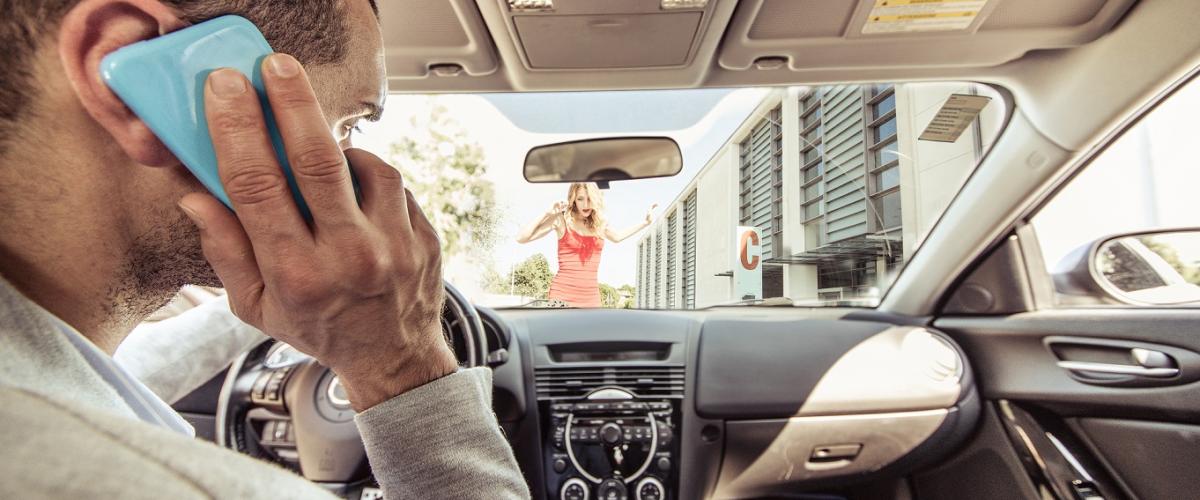
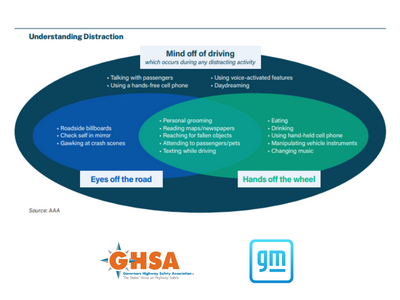
Driver distraction – which includes eating, drinking, grooming, day-dreaming, talking and texting on handheld devices and many other actions that take a motorist’s eyes and mind off the road – is a contributing factor in many crashes despite many instances going unreported. In 2021, 3,522 people died in distraction-related crashes, up 12% from the year before and accounting for 8.2% of all road deaths (Overview of Motor Vehicle Crashes in 2021, National Highway Traffic Safety Administration [NHTSA]. At any given moment during daylight hours, more than 373,000 U.S. drivers are holding a cell phone to their ear while driving (Driver Electronic Device Use in 2021, NHTSA).
Phone use while driving – particularly calling and texting – is one of the most common distractions. When a person reads a text while driving, his or her eyes are off the road for an average of five seconds. At 55 miles per hour, that is like driving the length of an entire football field while blindfolded.
Many states and local jurisdictions have passed laws that address these behaviors. GHSA's message to all drivers is simple: Don't use cellphones or other electronic devices while driving, regardless of the current law. Keep your hands on the wheel and your eyes and mind on the road.
Nearly every state has passed some sort of statewide law against distracted driving, but since July 2018, nine states have adopted new hands-free distracted driving laws that account for new technology and clearly state when and how a driver can or cannot use an electronic device behind the wheel. Currently, 24 states and the District of Columbia (D.C.) ban handheld cellphone use, while 48 states and D.C. ban texting while driving. No state completely bans cellphone use – including hands-free operations – for all drivers, but 37 states and D.C. prohibit all cellphone use by novice drivers, and 23 states and D.C. ban it for school bus drivers.
GHSA recommends that states prohibit handheld cellphone use by all drivers. Although texting and handheld bans are both critical, texting bans alone can be difficult to enforce. In states with texting only bans, drivers may claim they were only dialing when stopped by a police officer. Enforcement demonstration projects in New York, Connecticut, Delaware and California have shown that handheld cellphone bans can be enforced effectively and reduce driver use of a cellphone.
While law enforcement plays a vital role in reducing distracted driving crashes, injuries and fatalities, it is critical that state laws be equitably applied regardless of race, nationality, gender, sexuality, or any other unique characteristics.
In 2022, GHSA collaborated with General Motors to produce a report, Directing Drivers’ Attention: A State Highway Safety Office Roadmap for Combating Distracted Driving, which offers one of the most comprehensive looks at this pervasive yet preventable traffic safety problem and urges a broad culture shift to make this deadly behavior socially unacceptable. The report examines data shortcomings and other obstacles impacting efforts to reduce distracted driving, and reviews State Highway Safety Office (SHSO) initiatives and the challenges impacting those efforts. It also provides 29 action-oriented recommendations for the SHSOs that cover a wide range of factors that affect distracted driving, including state laws, data collection, education and public outreach, enforcement, infrastructure, safety funding sources, partnerships, and leadership.
In 2021, GHSA and the Transportation Research Board’s Behavioral Traffic Safety Cooperative Research Program (BTSCRP) issued a research report that reviewed distracted driving laws, enforcement and public education practices across the United States and Canada to develop a library of resources and best practices that states and other stakeholders can use to enact or revise their laws and enhance enforcement and education efforts (Using Electronic Devices While Driving: Legislation and Enforcement Implications, Transportation Research Board, National Academies of Sciences, Engineering, and Medicine).
Researchers found that the most effective laws and state safety efforts had the following common elements:
- Unambiguous statutory language that clearly defines when and how a wireless device can and cannot be used
- Penalties and fines in line with other traffic citations
- A combination of high-visibility enforcement of the law and targeted public information, education and outreach campaigns
- Sustained coalition-building efforts
News tagged with Distracted Driving


Featured Initiative
Distracted Driving Grant Results: Montana
Through a grant from GHSA and General Motors, MT HSO partnered with local FCCLA chapters to encourage their members to develop and implement distracted driving campaigns in their communities.
Read More
Facts & Figures

Laws
34 states ban drivers from using handheld cellphones while driving. 36 states ban all cellphone use by novice drivers, and 25 states prohibit it for school bus drivers. Currently, 49 states ban text messaging for all drivers.