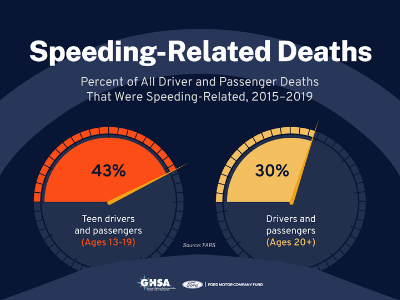

Speeding – exceeding the posted speed limit, driving too fast for conditions or racing – is an overlooked and dangerous driving behavior that has become the norm for many U.S. drivers.
Speeding is a contributing factor in traffic fatalities nationwide. In 2021, there were 12,330 fatalities in speeding-related crashes, up 8% from 11,428 deaths in 2020 and the number highest since 2007 (Summary of Motor Vehicle Traffic Crashes, National Highway Traffic Safety Administration). Speeding-related crashes accounted for 29% of all traffic fatalities in 2021.
GHSA PolicyClick here to view GHSA Policy and Priorities on Speeding and Aggressive Driving |
Speeding is often one component of aggressive driving, which NHTSA defines as "committing a combination of moving traffic offenses [that] endanger other persons or property." Some states have passed aggressive driving laws that delineate these traffic offenses, which include speeding, red-light running, failure to yield, following too closely, improper passing and more.
To make progress in achieving zero deaths on our nation's roadways, emphasis must be given to addressing speeding and aggressive driving with the same intensity as seat belt use and impaired driving.
GHSA was one of the first national safety organizations to sound the alarm about excessive speeding observed during the start of the COVID-19 pandemic. As this public health crisis – and the uptick in excessive speeding – stretched into 2021, GHSA released reports on pedestrians, who are often put at risk by speeding drivers, and teen drivers, who are more likely than other motorists to be involved in speeding-related fatal crashes.
In addition, GHSA, the Insurance Institute for Highway Safety and the National Road Safety Foundation partnered to fund and evaluate a speed management pilot project in Maryland that began in the summer of 2021. Both projects are employing a comprehensive approach to this pervasive problem that includes infrastructure improvements, equitable traffic enforcement (including the use of automated enforcement in Virginia), public education and outreach, and advocacy. The goal is to develop a speed management template that can be used in other states and communities.
State highway safety offices (SHSOs) continue to focus on combating speeding and aggressive driving through increased data-driven enforcement, technological advances and public information and education programs that focus on the dangers of engaging in this behavior, provide tips for safe driving and/or publicize upcoming high visibility enforcement, a proven countermeasure for bolstering driver compliance with posted speed limits. Some SHSOs specifically focus their efforts on school and work zones, since approaches in these areas have a higher degree of public support.
News tagged with Speeding and Aggressive Driving


Featured Initiative
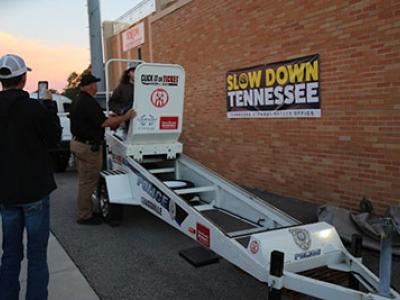
Ford DSFL Grant Results: Tennessee
The Tennessee Highway Safety Office was awarded a grant from Ford Driving Skills for Life & GHSA to educate and promote safe teen driving behavior through a series of in-person events in conjunction with SADD, Alliance Marketing & State Farm to connect schools with teen traffic safety activities.
Read More
Facts & Figures