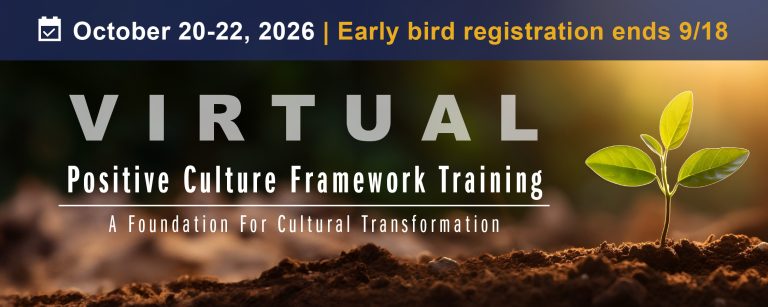
2026 VIRTUAL TRAINING
Our 3-day (two, 2-hr sessions each day) Positive Culture Framework Training provides a foundation for efforts to improve health and safety that address a wide variety of complex social issues. Training attendees will:
- Learn how culture influences behavior
- Develop and refine skills in three critical areas: leadership, communication, and the integration of effective strategies
- Gain specific next steps for transforming culture to improve health and safety
The Positive Culture Framework Training is an excellent opportunity to engage with others across the country and move toward cultivating a culture that supports and sustains health and safety.
What Makes this Training Unique?
This is an interactive, synchronous training. Cameras are encourages to be on, and this virtual training will provide multiple opportunities for engagement including large group discussions, small group breakout sessions, and polling. The step-by-step handouts, interactive training sessions, and small group activities provide attendees with an informative, engaging experience. No recording will be available after the training. We thank you for your participation as it will enhance the overall experience for everyone!
Who Should Attend?
The Training is designed for anyone working to improve health and safety such as (but not limited to) health educators, traffic safety professionals, substance misuse prevention professionals, prevention specialists, violence prevention advocates, coalition members, government personnel, educators, and law enforcement officers.