FOR IMMEDIATE RELEASE
CONTACT: Adam Snider (GHSA), 202-365-8971
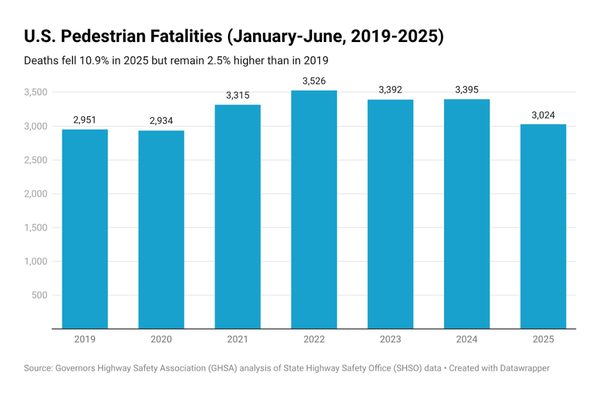
WASHINGTON, D.C. – Drivers struck and killed 3,024 people walking during the first half of 2025, an average of 16 per day, according to a new data analysis from the Governors Highway Safety Association (GHSA). That is an 11% decline from the same period the year before – the largest drop since GHSA began tracking pedestrian fatalities 15 years ago. While this recent safety momentum is positive, pedestrian deaths remain above the 2019 level, the last year before a steep rise in dangerous driving behaviors and traffic deaths caused by the pandemic.
An in-depth examination of original data GHSA collected from State Highway Safety Offices (SHSOs) across the country found that:
- The 10.9% drop in pedestrian deaths from 2024 to 2025 (January-June) is the largest decrease since GHSA began publishing these reports 15 years ago. This translates into 371 fewer pedestrian deaths than in the same period the prior year.
- However, this is still 2.5% higher than pre-pandemic levels (2,951 in January-June 2019).
- The pedestrian fatality rate measured per 100,000 population fell to 0.90 in 2025 – the lowest mark since 2020. Measured by vehicle miles traveled (VMT), there were 1.86 fatalities per billion VMT, the lowest since 2019.
- In addition to the lasting emotional trauma caused by a pedestrian being killed, there is a significant financial cost of each death. The total financial cost of all 3,024 fatalities from January through June 2025 combines to exceed $40 billion.
Pedestrian fatalities increased in 24 states, decreased in 23 states and D.C, and remained the same in three states for January-June from 2024 to 2025. Decreases in states including Alabama, California (-32%), Maryland, New Mexico and New York drove the nationwide count down from 2024, even though there were the same number of states (plus D.C.) that posted an increase and a decrease.
“Each pedestrian death is so much more than just a number,” said GHSA Chief Executive Officer Jonathan Adkins. “Each one is a family member, friend or neighbor that no one will be able to hug, see or share time with ever again. While we are pleased with the progress shown in the data, the only acceptable number of traffic deaths is zero.”
“Access to timely, high-quality data is essential to understanding and helping prevent roadway fatalities,” said Anderson Abernathy, President & COO of Michelin Mobility Intelligence. “We are encouraged by the progress reflected in this report, but the data also reinforces the need for continued collaboration across public and private sectors to improve safety for all road users, especially pedestrians. At Michelin we believe that integrating advanced analytics with cross-sector collaboration can help identify risk patterns earlier and enable more targeted interventions. Turning insight into impact is essential to the USDOT’s Safe System Approach designed to enhance safety for all road users.”
How to Improve Pedestrian Safety and Save Lives
Methods to improve pedestrian safety include minimizing pedestrians’ exposure to vehicles (particularly on high-speed roadways), prioritizing visibility between drivers and pedestrians, managing speed and enforcing speed limits, using new technology and data to identify and address challenges, promoting safe road use through education and enforcement and improving post-crash care. Using both traditional crash databases and innovative new data sources to learn from fatalities and injuries can also inform safety plans, countermeasures and policy.
GHSA’s report provides a first look at the pedestrian fatality trends well before the National Highway Traffic Safety Administration’s (NHTSA) Fatality Analysis Reporting System (FARS) data are available. It presents individual data for all states as well as projected pedestrian fatality rates per population — at both state and national levels — and per vehicle miles traveled at the national level.
Later this year, GHSA will publish the full-year 2025 pedestrian fatality projections based on state data, which will also include an analysis of the 2024 national FARS data. FARS provides additional insights on why, where and how drivers strike and kill people walking. This forthcoming report will also summarize promising state and local approaches to protect pedestrians on U.S. roadways.
Steve Jackson and Paula Raymond of toXcel conducted the data analysis and authored the report. Michelin Mobility Intelligence provided financial support for the report’s production but did not provide editorial direction or review content.
# # #