Summary
In rural communities, young walkers and riders often have fewer safe places to practice and fewer opportunities to build everyday traffic safety skills. WTSC, through its partner Asotin County Community Services (ACCS), designed a program that meets kids where they are, bringing practical safety instruction directly into local neighborhoods through mobile, pop-up traffic gardens.
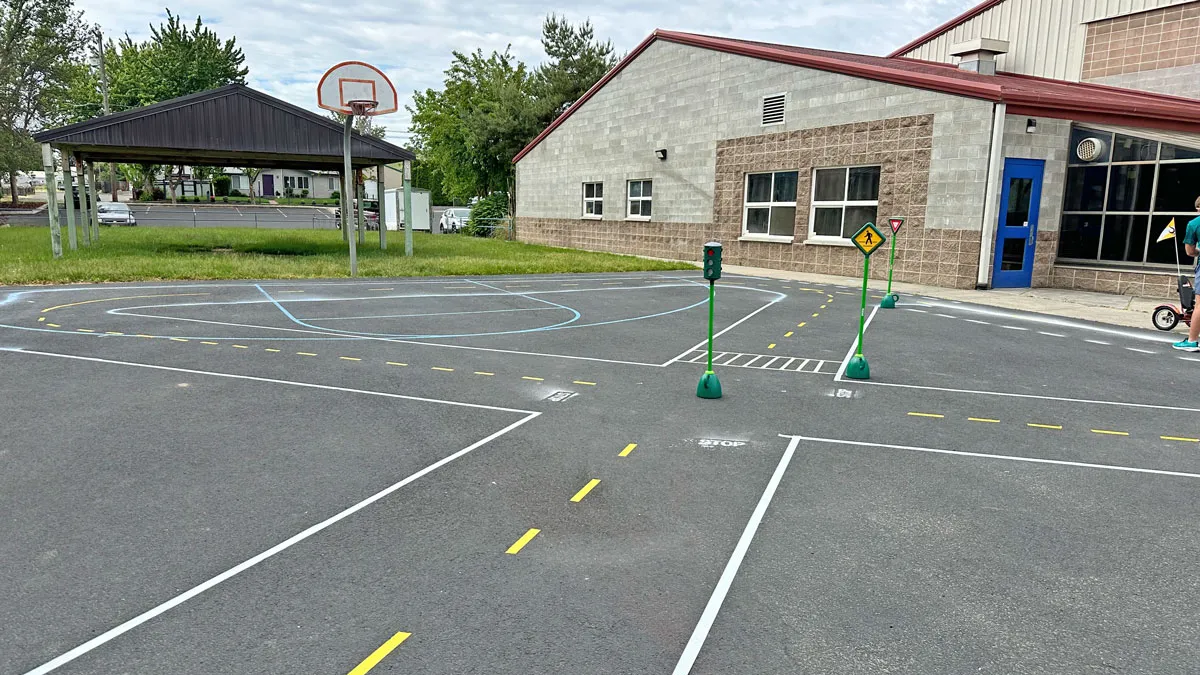
A traffic garden is a miniature street network designed for children to practice biking and road safety in a safe, car-free environment. It includes features like small roads, intersections, and traffic signs to help teach the rules of the road. The goal was to build confidence and skills among students around helmet fit, bike fit, sign recognition, hand signals, visibility and bike safety checks. A second goal was to strengthen local partnerships to ensure program stability beyond the initial season.
Pop-Up Traffic Gardens
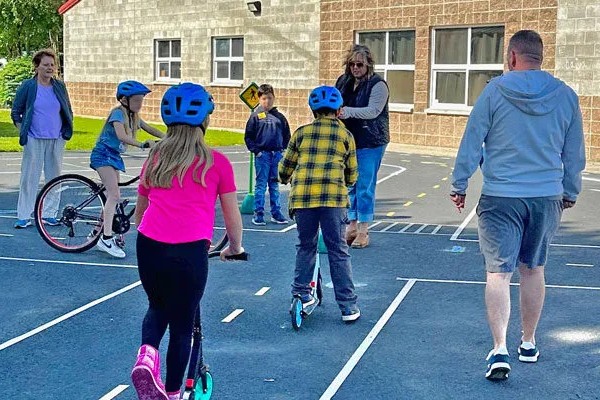
Between May and September, the project delivered five mobile pop-up traffic garden events using a small-group, station-based format designed for hands-on learning and high participation. Children rotated through stations in small groups, allowing instructors and volunteers to tailor coaching and keep the experience active and engaging.
Late-season events demonstrated strong coordination among partners and hosts, including installations at Beachview Park during National Night Out, a pop-up traffic garden during the Rotary Bike Rodeo at Sportsman’s Warehouse and a “Toddler Trek” designed for young children and caregivers. Across the season, the program educated more than 270 youth, with volunteer support playing a central role in staffing instructional stations.
In addition to events, the project team promoted youth traffic safety through outreach to parents and caretakers and through Safe Routes to School-related activities delivered by school and community partners. Messaging ran on Facebook, Instagram and through local media, extending awareness and building support for pop-up events and the long-term vision for a permanent traffic garden.
Permanent Traffic Garden
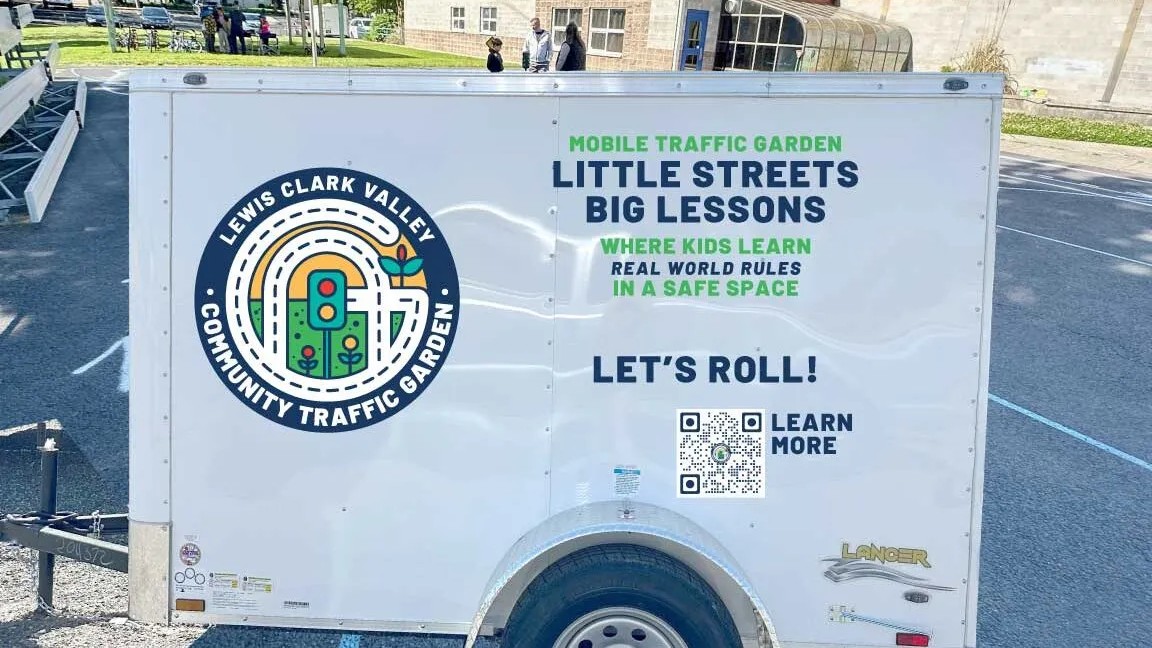
While construction of a permanent traffic garden at Highland Elementary was delayed during the project period, the team is moving forward with plans to establish it as a long-term community asset. The mobile traffic garden kit, including bikes, scooters, signs, stencils, cones, turf and curriculum, is designed to integrate directly into the future permanent traffic garden once the site is established. Fundraising and sponsorship development are underway, with early support from Pacific Northwest Federal Credit Union and David Evans & Associates. The goal is to complete fundraising by the end of 2026.
Project Impact
By the end of the season, the program had exceeded its participation target and demonstrated strong satisfaction and learning outcomes in post-event surveys. At two September events, parent and child survey responses reflected correct identification of traffic rules and signs, increased confidence to walk or ride and intent to apply or share what they learned. Kids enjoyed the events, and everyone surveyed said they would return or shared a favorite activity. Youth respondents also reported increased safety knowledge, and community respondents said the program added value for local families.
The project team has also strengthened the program sustainability by expanding its partnerships. After the final event, the Asotin County Boys & Girls Club joined ACCS as a program partner, providing staff training and ongoing coordination to manage future mobile kit lending and pop-up event hosting. The project also reported early signals of broader community benefit, including a marginal decrease in self-reported risky driving behaviors, with plans to continue monitoring risky driving behavior over time as staffing and funding allow.