Wake Up Call! Report Update: Understanding Drowsy Driving and What States Can Do

Wake Up Call Report Update
February 26, 2026

Driving tired can be just as dangerous as driving under the influence of alcohol or drugs – yet one in five drivers admit doing it at least once in the past month. GHSA's updated report, developed with General Motors’ (GM) support, reveals the deadly consequences of this preventable behavior and outlines concrete steps to eliminate it.
More than 6,300 people died in suspected drowsy driving crashes in 2023 – ten times higher than the 633 deaths officially reported in federal statistics. GHSA's comprehensive analysis uncovered this hidden toll by cross-referencing multiple sources, including the Fatality Analysis Reporting System and the Crash Investigation Sampling System. This massive gap exists because fatigue, unlike alcohol or drugs, leaves no physical evidence that can be tested after a crash.

The data analysis was conducted by Dr. Jim Hedlund, a well-respected roadway safety statistician with Highway Safety North. The report builds on GHSA's original 2016 report, which offers numerous solutions and strategies to address drowsy driving.

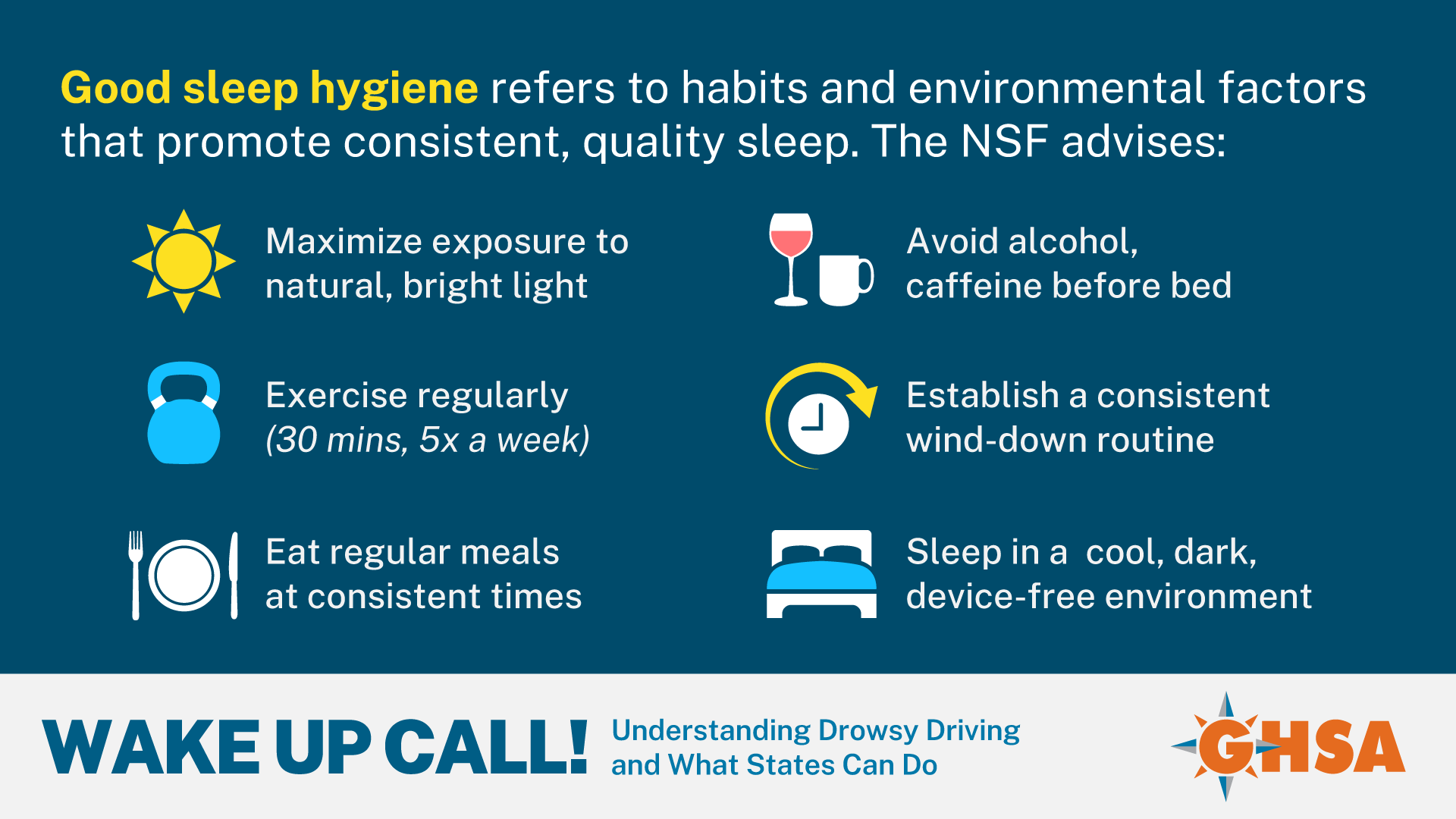
Tips for good sleep

Recommendations for Ending Drowsy Driving

The report outlines several strategies to combat this dangerous behavior:

  • Start with prevention: Promoting healthy sleep habits for everyone – especially for teens as they begin their driving journey – is essential. Drivers should practice good “sleep hygiene,” which includes sleeping in a quiet, cool, device-free environment and avoiding caffeine or alcohol before bed.
  • Vehicle technology that’s available now: Advanced Driver Assistance System (ADAS) features can monitor for telltale signs of drowsiness (like yawns or long blinks) and issue visual, auditory or haptic alerts to tell drivers to take a break. Notably, none of the current systems prevent a driver from ignoring them and continuing to drive, or from turning them off entirely.
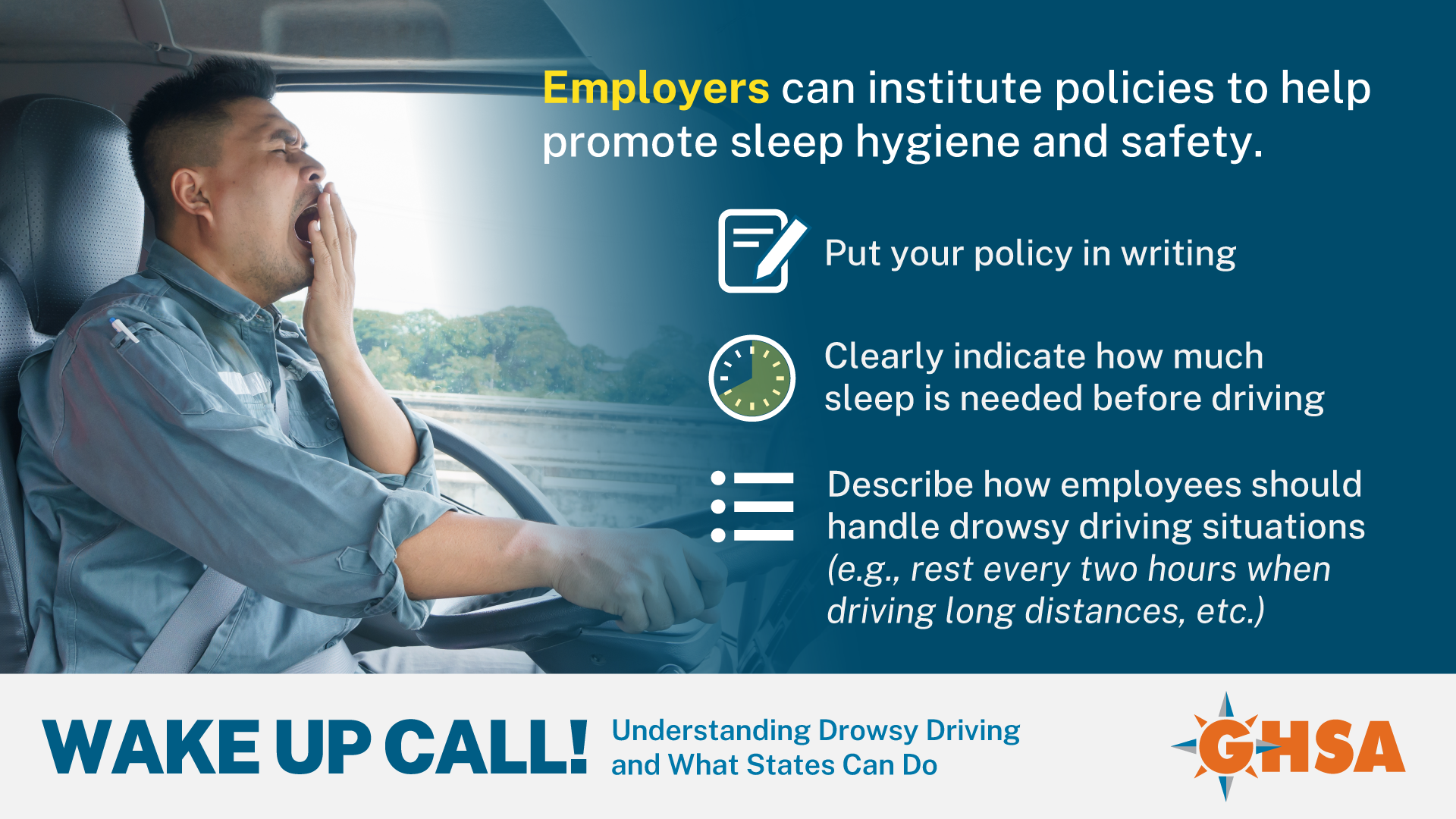
  • Change the culture at work and school: Employers should implement responsible scheduling and travel policies to minimize fatigue. School districts can consider shifting high school start times later in the day to help teens get more rest. One study of high school student drivers found significantly lower crash rates with a later school start time.
  • Build more, smarter infrastructure: Infrastructure changes such as rest stops, rumble strips and cable median barriers can help prevent drowsy driving, wake drivers up or reduce the severity of a run-off-the-road crash.
Employee drowsy driving prevention tips
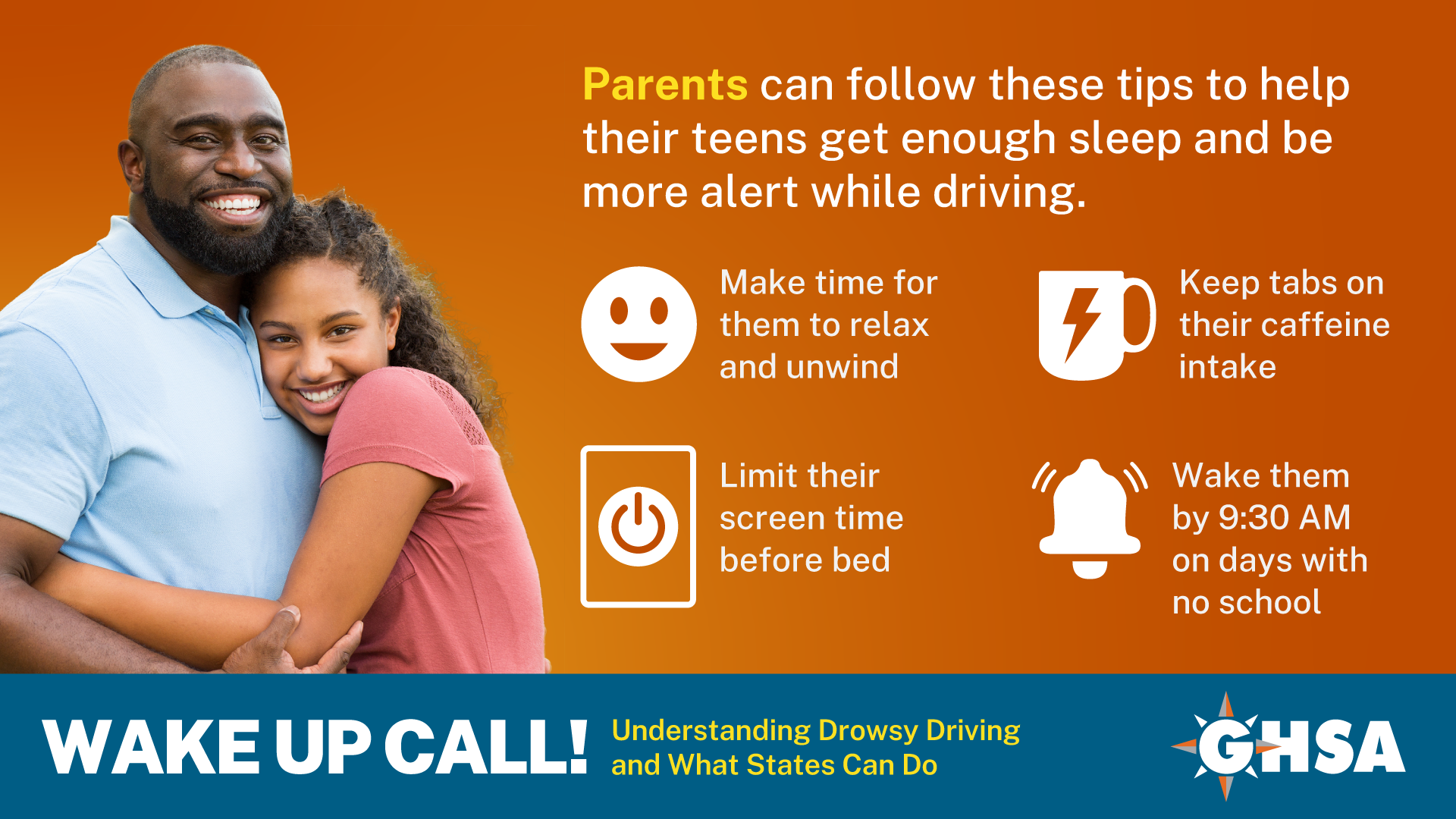
Sleep tips for parents

Partner

Related Issues

Related Resources